Auxiliary Transmissions
by John de Marrais
Worcester, New York
|
Introduction:
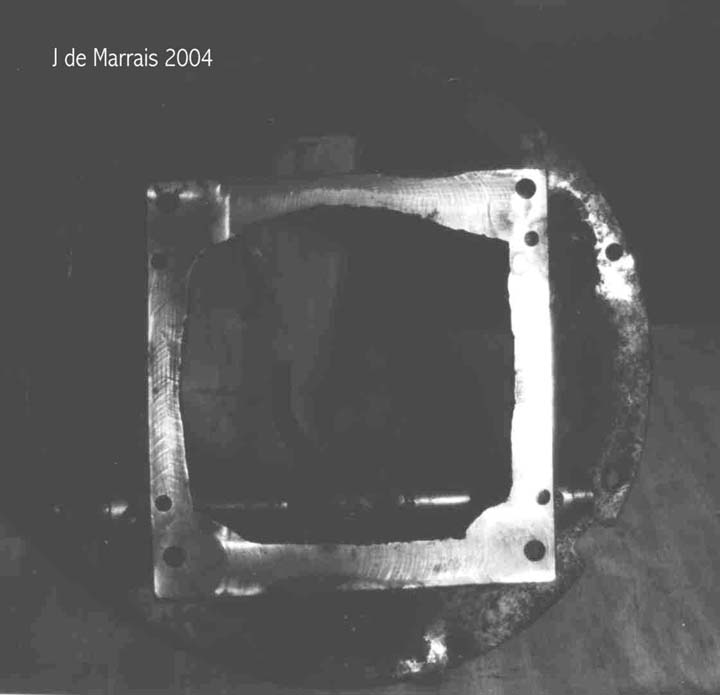
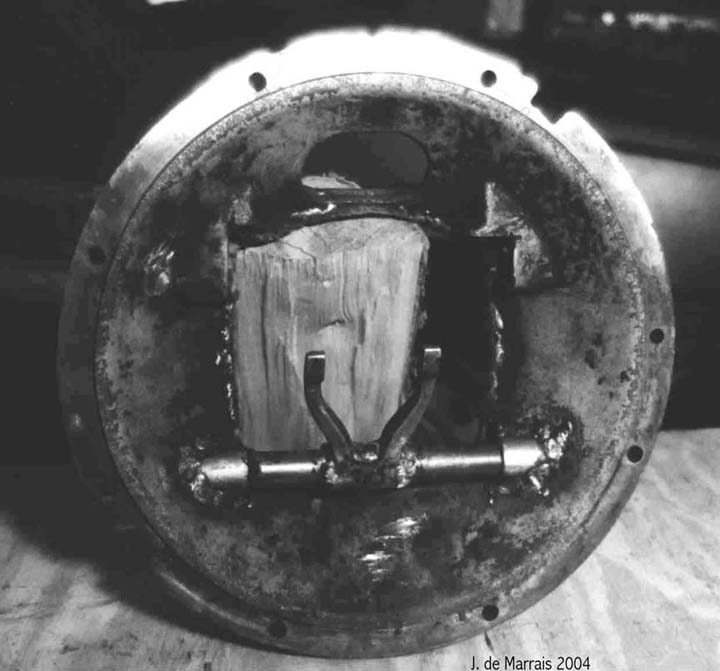
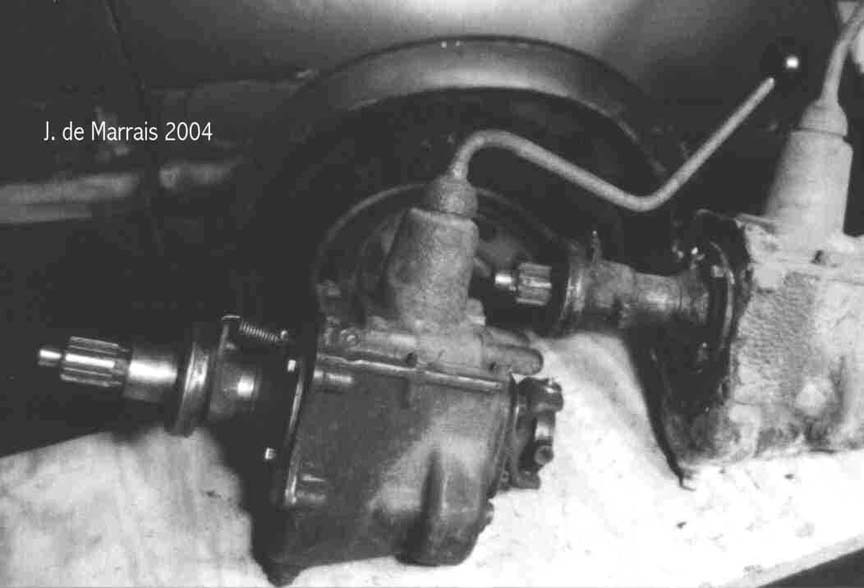
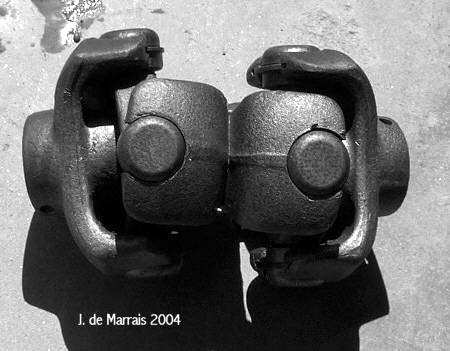
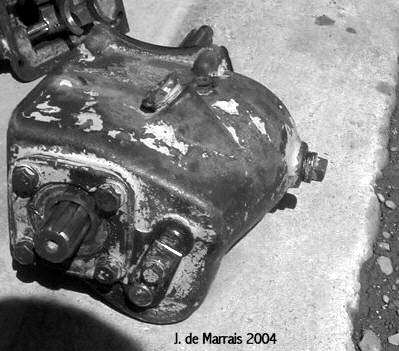
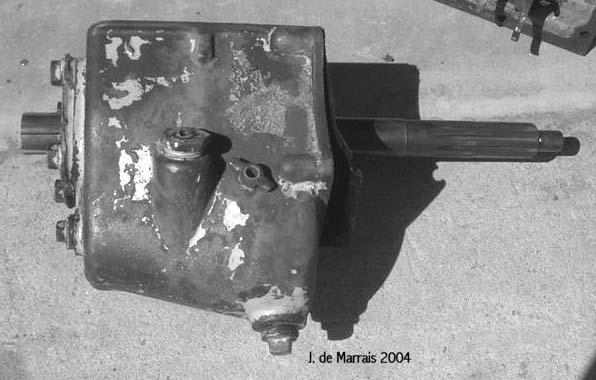
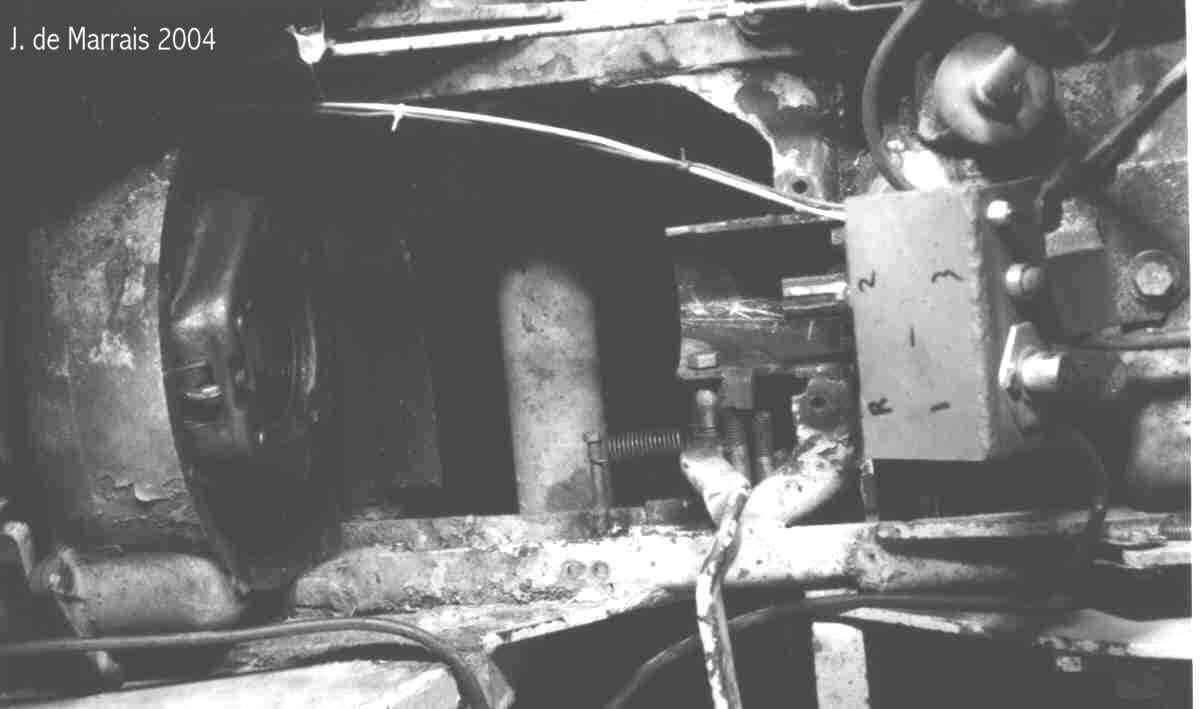
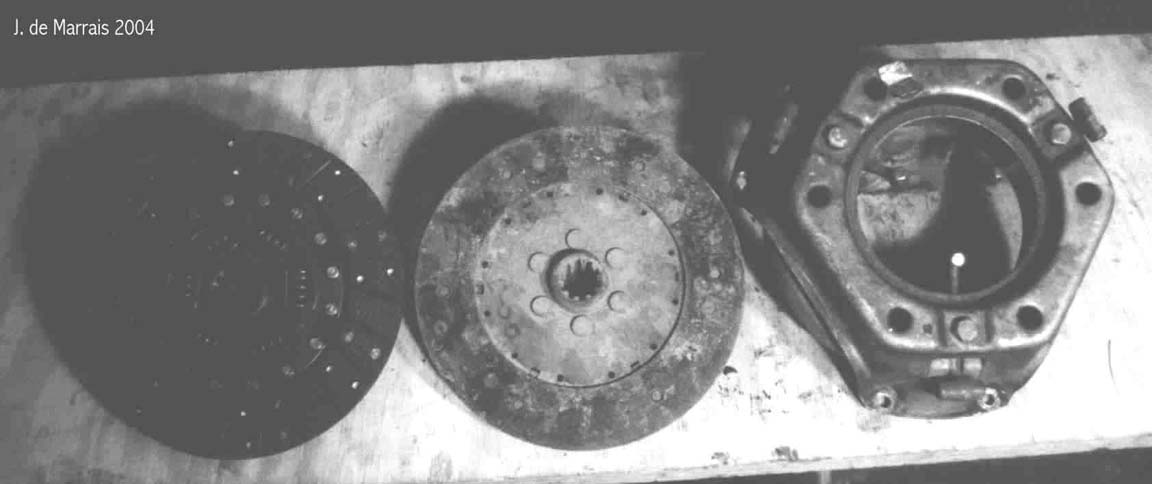
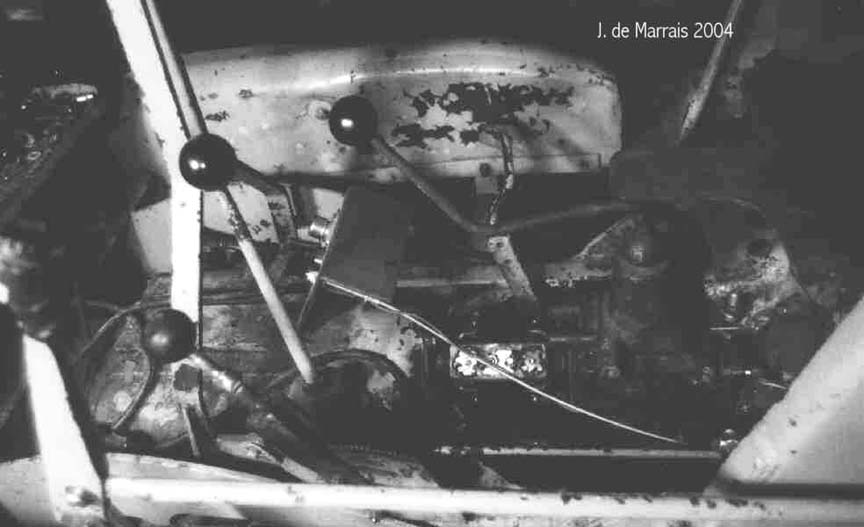
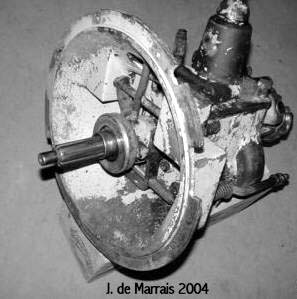
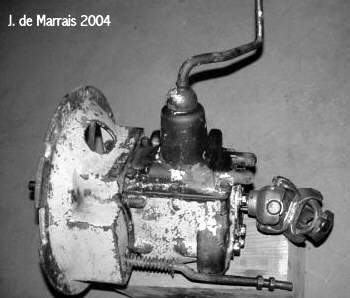
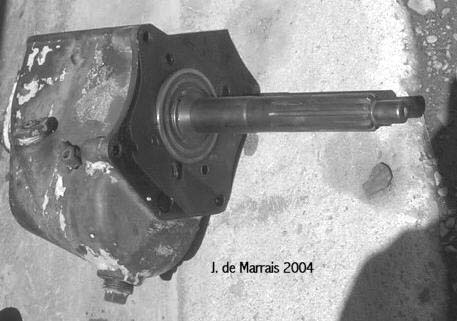
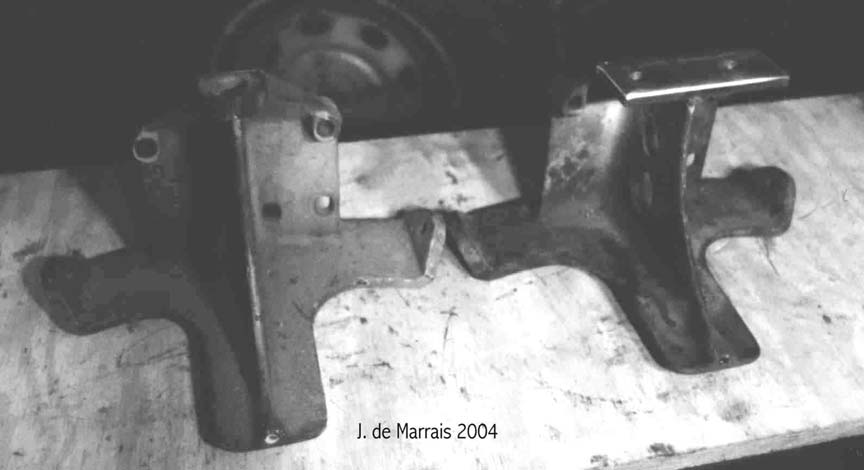
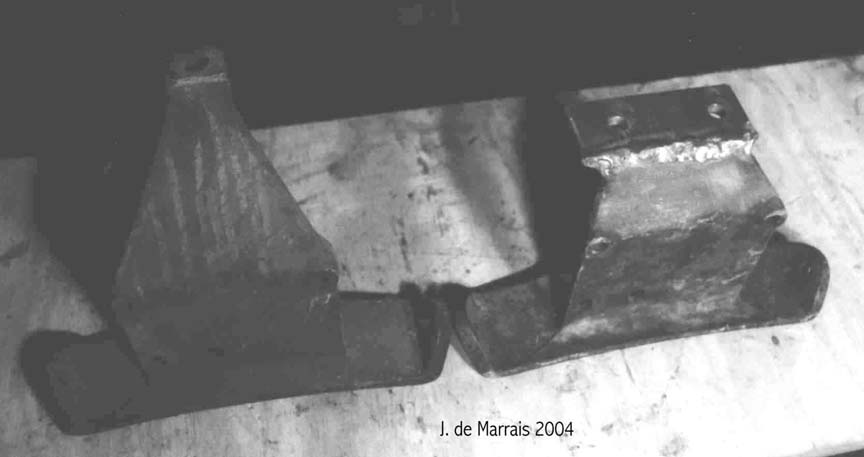
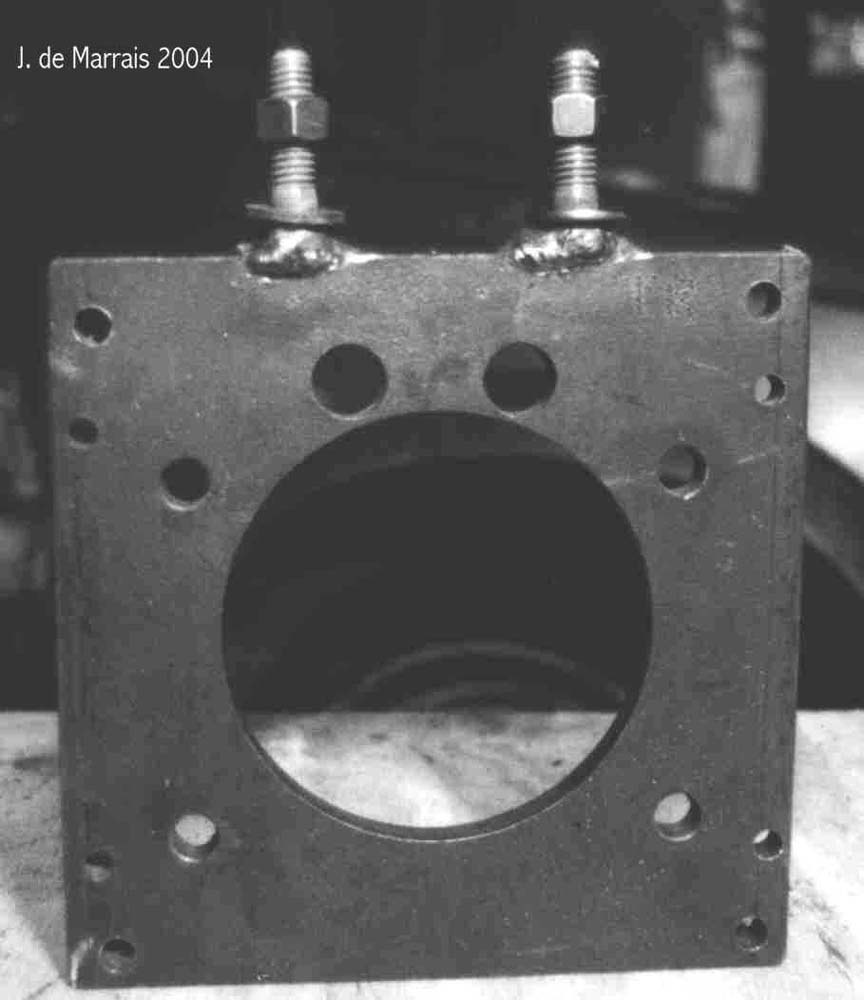
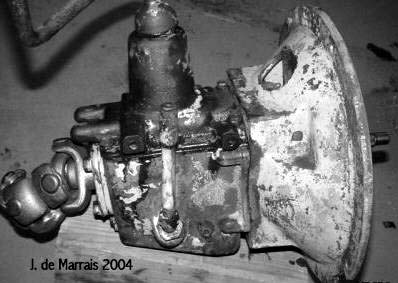
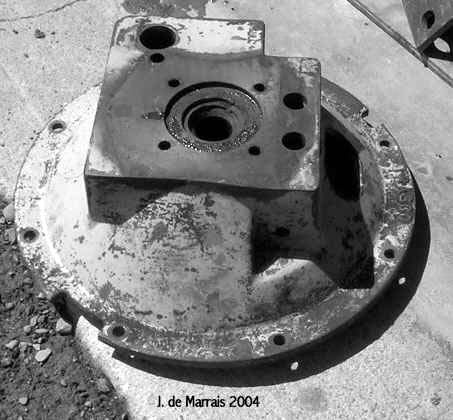
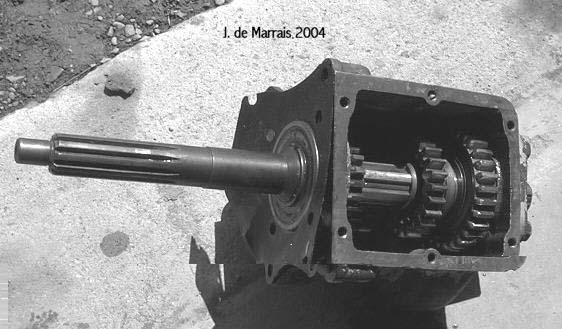
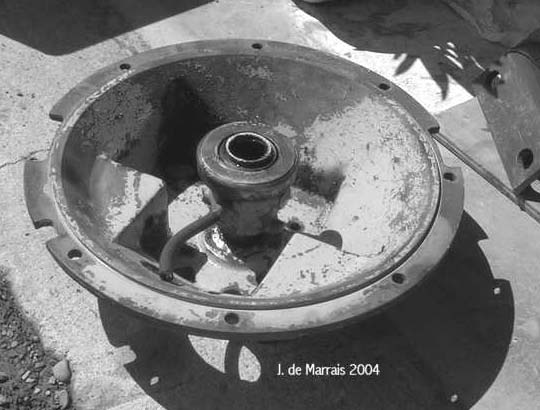
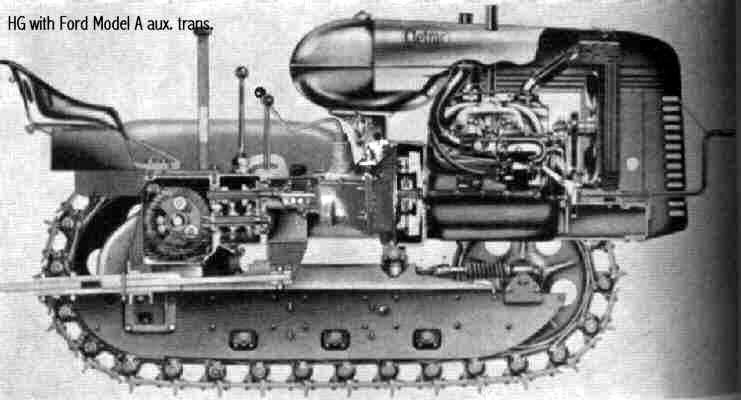
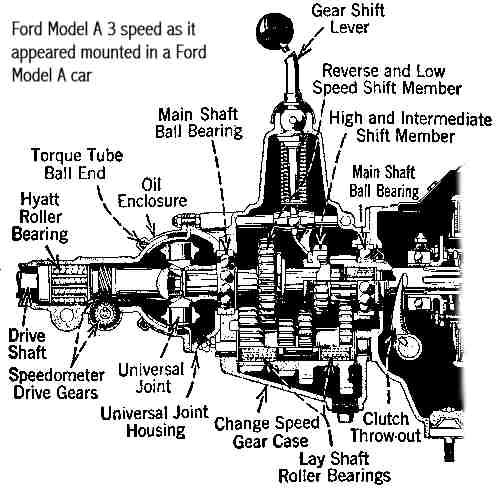
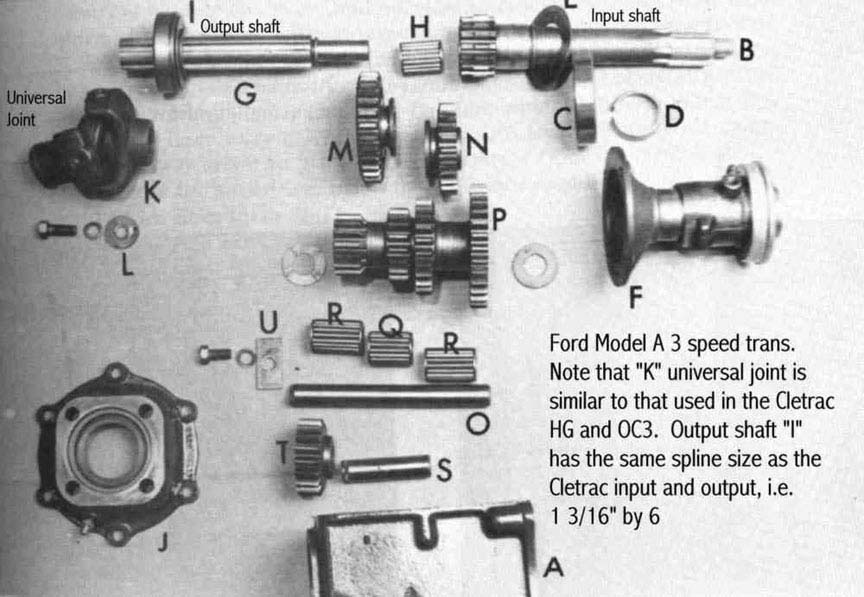
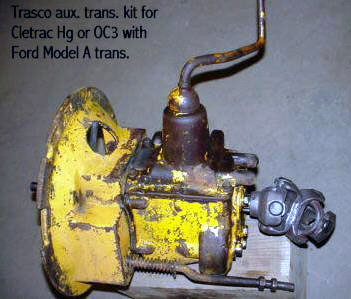
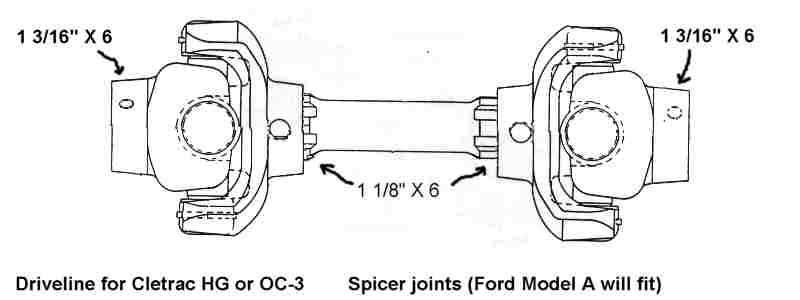
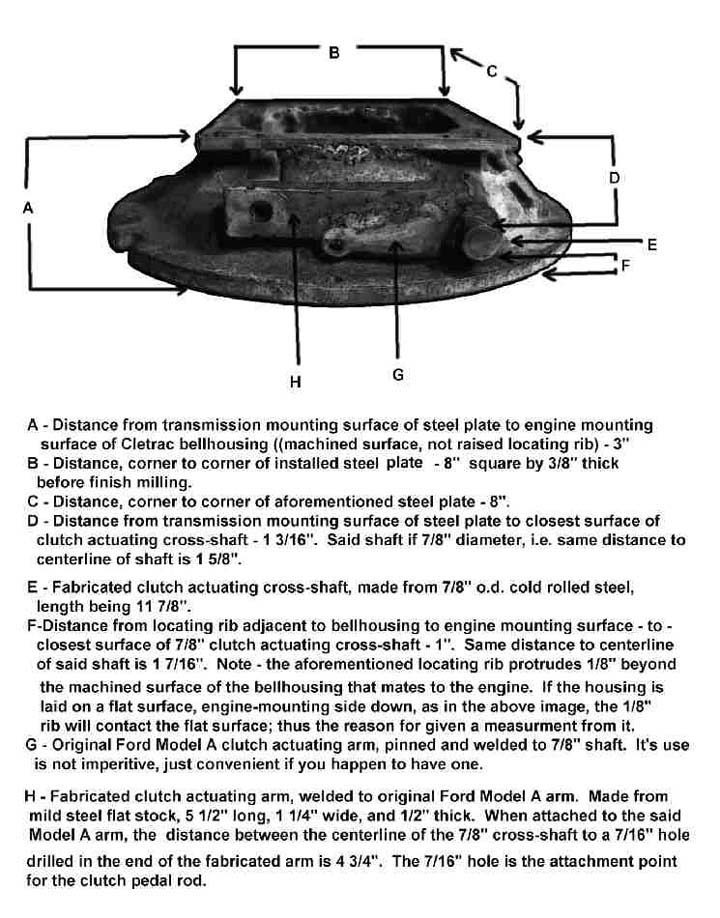
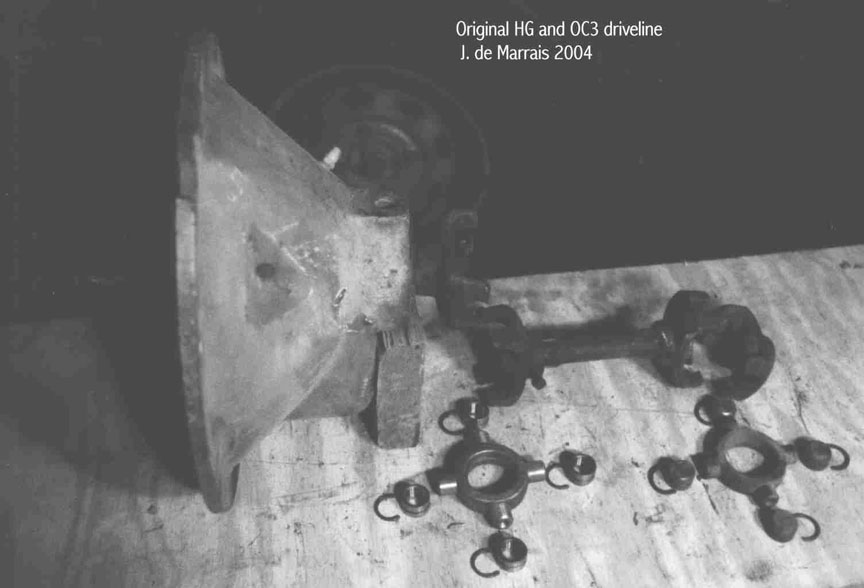
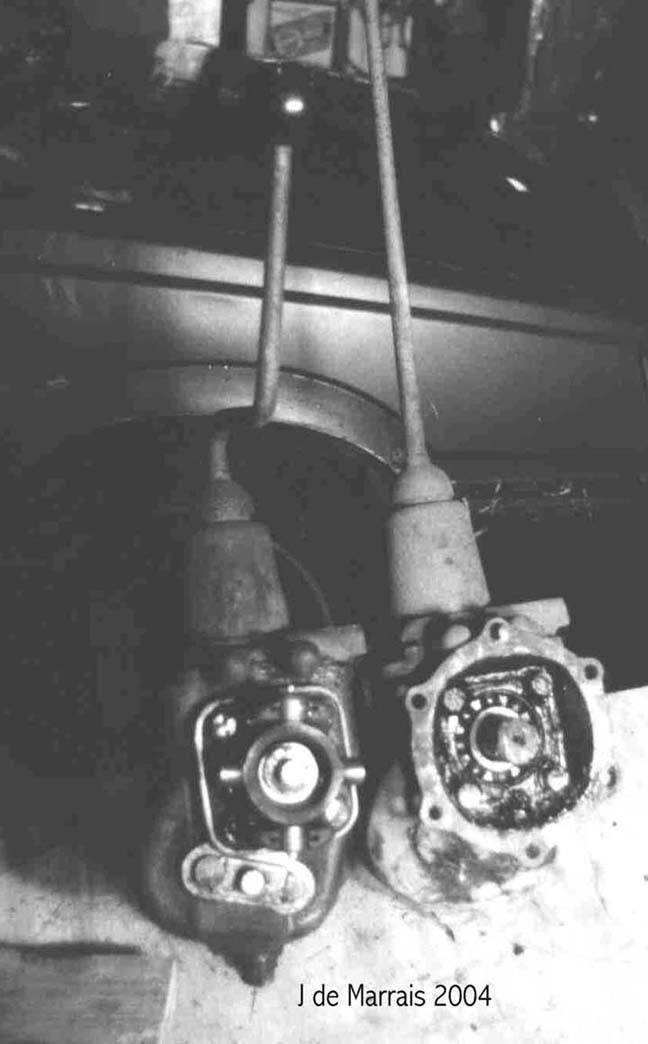
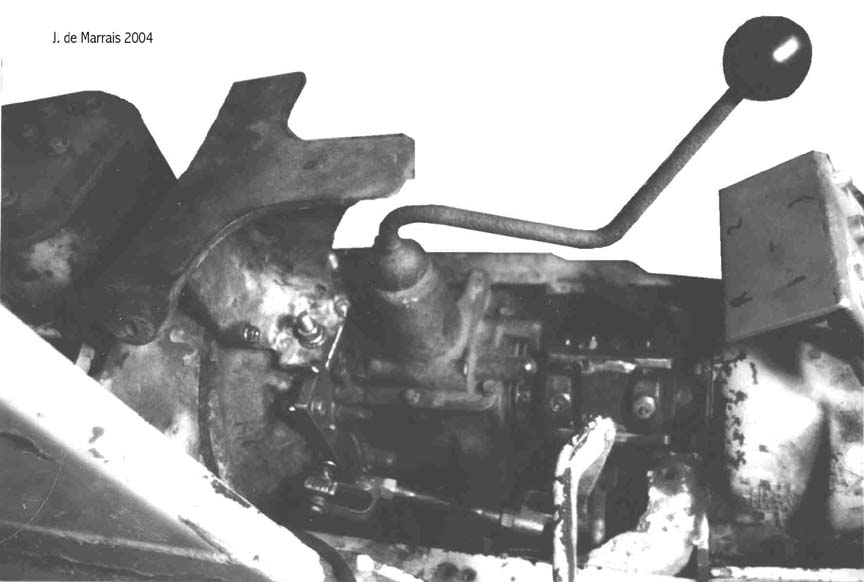
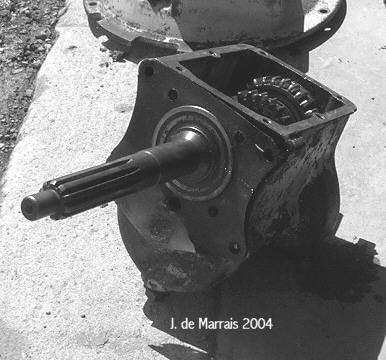
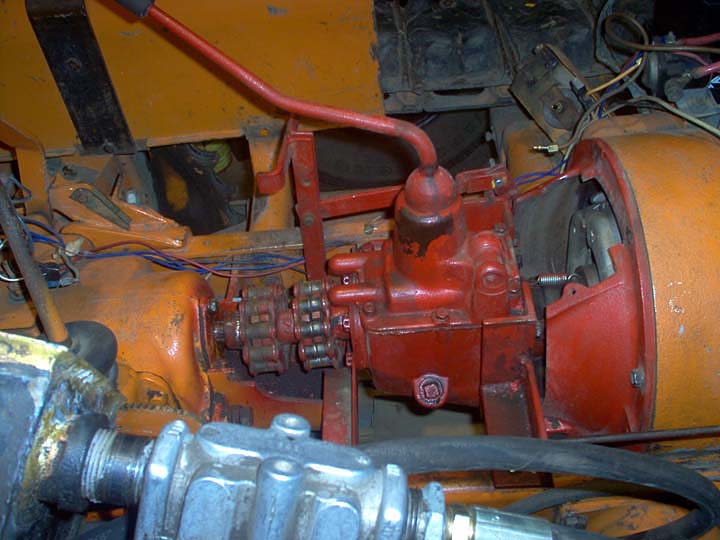
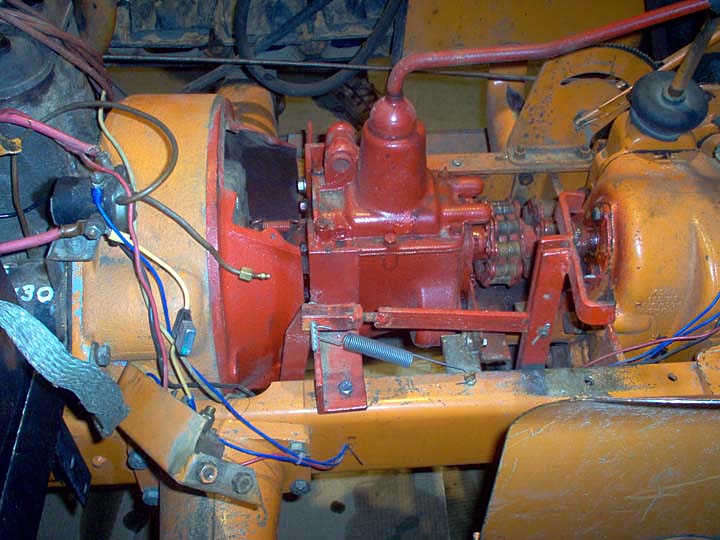
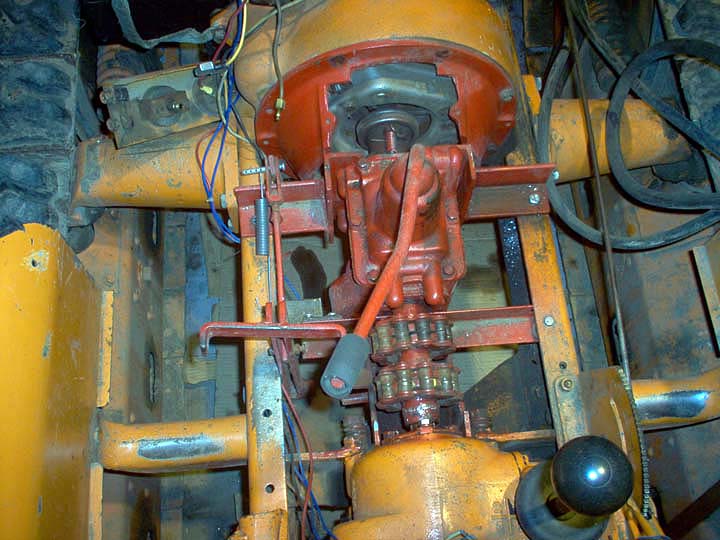
Cletrac HG or OC3 crawlers and an auxiliary transmission. Note: the following is offered free, so take it for what’s it’s worth. I'm sure someone can improve upon what I did. The Cletrac HG or OC3 comes equipped with a Clark three-speed transaxle. The crawler was originally designed for row-crop farm work. Subsequently, it is not geared low enough for serious dirt moving, towing, or pushing, without slipping the clutch and/or lugging the engine. After installing an auxiliary transmission in my HG, it’s hard to imagine how I used it before the modification. It's a night-and-day difference. The little Cletrac crawler, in first gear and full throttle travels at 2.01 m.p.h. That's fast. With the three-speed auxiliary transmission installed and both transmissions in first gear, the same crawler travels at .64 m.p.h. It can push and tow with the engine almost at idle. Besides making the crawler more useful, the lower gearing will enhance the life of the engine and the clutch. Low gear is a problem in many older tractors; not just crawlers. This holds especially true when attempting to use certain types of PTO powered attachments, e.g. a snowblower or rotary tiller. It is sometimes impossible to keep the R.P.M. up to a high enough speed to operate the attachment, and at the same time, keep the ground speed slow enough to operate. A look at some other crawlers and stock ground speeds in first gear and full throttle. An Oliver OC4 with the optional auxiliary marketed as the "Slo-Low" travels 1.5 m.p.h. in high range and .8 m.p.h. in low. John Deere MC travels .9 m.p.h. John Deere 420 travels .87 m.p.h. John Deere 1010 travels 1.4 m.p.h. Allis Chalmers H3 travels at 1.2 m.p.h. A few machines that use basically the same three speed Clark transaxle as the Cletrac HGs and OC3s as follows. Terratrac GT-30 travels 1.78 m.p.h. Case 310C travels at 1.74 m.p.h. The wheel tractors known as B.F. Avery or Minneapolis-Moline BF - are both basically Cletracs with wheels and use the same Hercules IXB3 engine and Clark three-speed transaxle and travel 2.42 m.p.h. Specs. for the HG or OC3 with the Ford Model A 3 speed transmission installed as an auxiliary unit, ground speeds at full throttle are as follows: With no aux.1st - 2.01 m.p.h., 2nd - 3.19 m.p.h., 3rd - 5.24 m.p.h., Rev. - 2.33 m.p.h. With the Ford Model A three-speed transmission as an auxiliary transmission: Range 1: 1st - .64 m.p.h., 2nd - 1.02 m.p.h., 3rd - 1.68 m.p.h., Rev. - .74 m.p.h. Range 2: 1st - 1.08 m.p.h., 2nd - 1.72 m.p.h., 3rd - 2.83 m.p.h., Rev. - 1.26 m.p.h. Range 3: 1st - 2.01 m.p.h., 2nd - 3.19 m.p.h., 3rd - 5.24 m.p.h., Rev. - 2.33 m.p.h. Range Rev.: 1st - .53 rev. m.p.h., 2nd - .85 rev. m.p.h., 3rd - 1.4 rev. m.p.h., Rev. - .62 forward m.p.h. Oliver offered, as an option for the OC3, a kit for installing an auxiliary transmission. It was made by Trasco, which I believe was a company in California. The kit came with a custom made clutch housing, a modified Ford Model A three-speed transmission and miscellaneous parts. Installation required using the original Cletrac 9" diameter clutch disk, and some of the original driveshaft parts - welded together. Once the modified driveshaft is assembled, there is no easy way to remove it without damage. The transmission's input shaft was either heavily modified, or remade to accept the Cletrac clutch disk and splines. The front ball-bearing retainer on the Ford transmission was eliminated and accommodation in the new clutch housing took its place. I had never seen the Trasco kit when I began fabricating my aux. setup. If I had, I'm not sure it would have helped. I attempted to do the job with commonly available parts, wanted the finished unit to be easily serviceable, and avoided any high-tech machine work. To a degree, this was accomplished. My setup does NOT require complicated modification of the transmission. The driveshaft I fabricated uses stock Cletrac (Spicer) universal joints and is easily removable without damage. The one catch to fabricating the aux. setup is, you need a Ford Model A car (not truck) transmission. As far as I can ascertain, it is the best choice for many reasons. It seems Oliver and Trasco felt the same way. That's not to say there aren't "one-time" finds out there for other parts that might work as well, or better. The Ford transmission is simple, rugged, compact, and replacement parts are available for it at a reasonable cost. That, thanks to all the Ford Model A car collectors. The original Cletrac powershaft coming out of the clutch housing, as well as the input shaft on the original Clark three-speed transaxle in the HG and OC3, is an odd size. 1 3/16" by 6. You will be hard pressed to find anything to fit it; I've tried. Coincidence, or serendipity, some vintage Ford equipment uses the same size splines including various Model T and Model A parts. This includes the output shaft on the subject Model A transmission. So... the original Cletrac yoke fits on it perfectly. When I began searching for a Model A transmission, I didn't know what one looked like. After learning to recognize it, I began to find them all over. I do, however, live in a rural farming area where many Model A Fords were converted into farm equipment. Subsequently, there are still quite a few laying around, here and there. I found over a dozen this past summer. On the down side, I see them on Ebay at times for over $200. Supply and demand, I guess. This marks the end of my first pontification regarding the auxiliary transmission. Next installment, I'll discuss how to recognize the Model A transmission, and the modifications it needs for use in the Cletrac. That is, unless someone has a better idea. See Addendum Notes Below
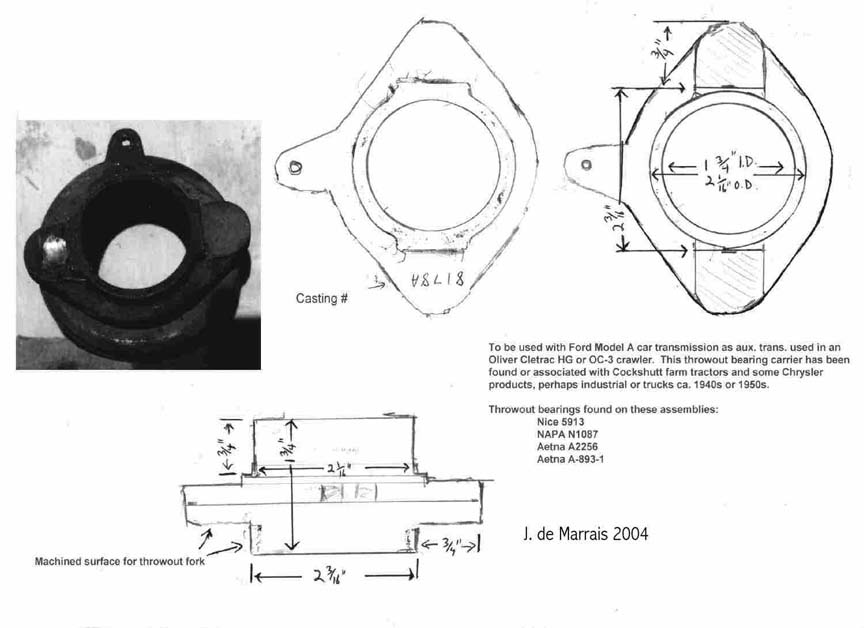
New part numbers for Aux. trans. If anyone is using information I've posted about constructing an aux trans. setup. I found a good part number for the throwout bearing and carrier I used. Mine came off a Cockshutt farm tractor, but it is the same one used in the 1947-48 Dodge Powerwagon. The entire assembly - the carrier with the bearing is a NAPA N1313 for around $70. Just the thrust bearing itself is: N1087 (at NAPA) or 2062(BCA) or CT52A-1 (Nissan-Ford). I also found it for sale at a vintage Dodge Powerwagon parts place for $35. For putting sealed bearings in the Ford Model A trans: New sealed input bearing - # on box: CR 6208-RSJ actual number on new bearing: SKF 6208-RS1 (or R51). Old unsealed bearing was: New Departure Endee 3208 |
Click picture for full sized image
|